
How to Resize an LVM Volume in Linux

Introduction
Hi everyone!
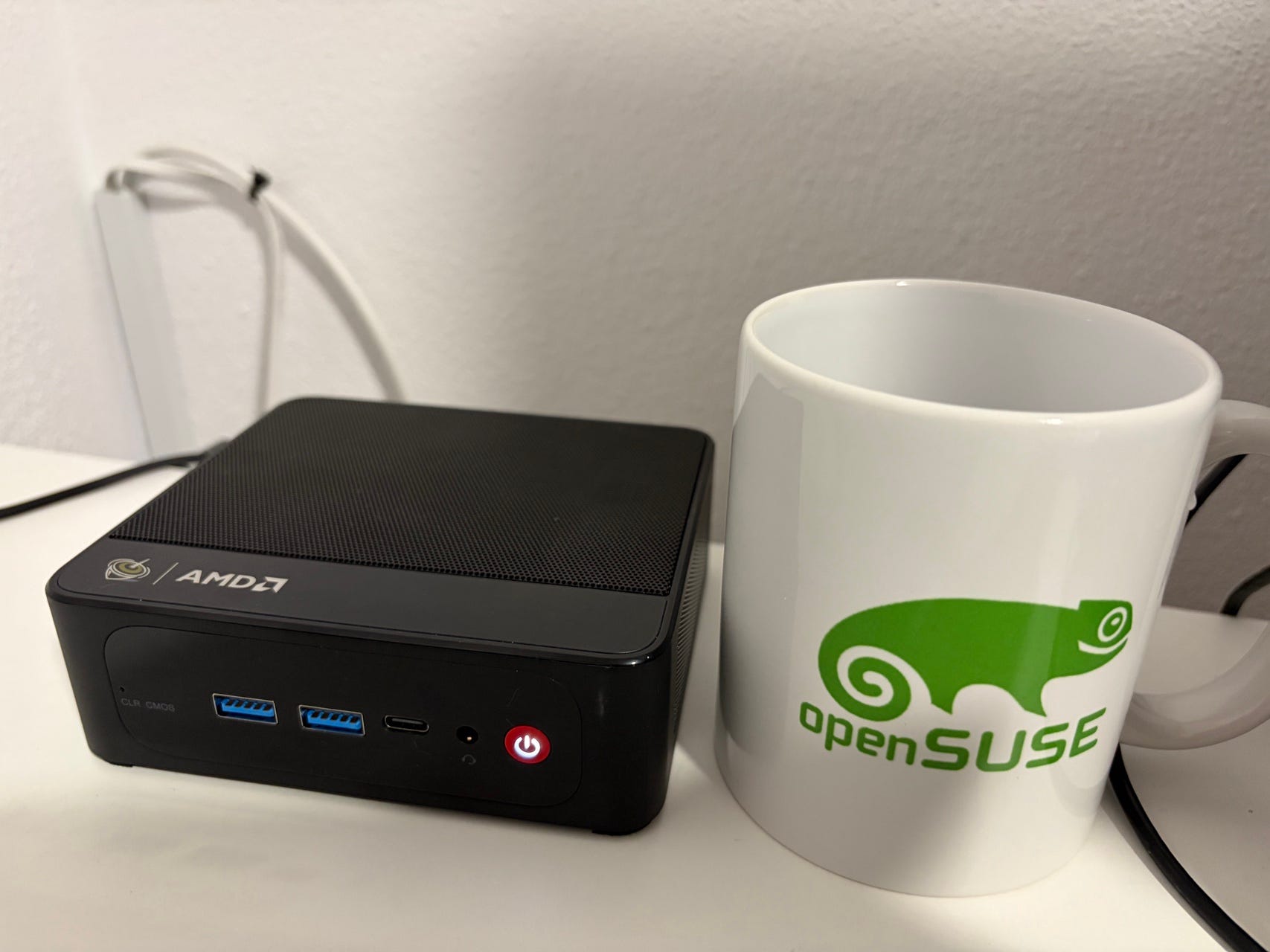
This post is a quick how-to resize a LVM volume for a Linux system. One mistake that I’ve made when setting up my mini PC Linux server with Alma Linux is that I didn’t pay attention to the defaults when partitioning the disk.
I woke up a few months later unable to install packages and several docker services failing, the main reason: insufficient disk space on /.
It turns out that by default the /home partition got 400GB of space allocated and the / partition got only ~70GB.
That is bad.
Filesystem                  Size  Used Avail Use% Mounted on
/dev/mapper/almalinux-root   70G   42G   29G  60% /
/dev/mapper/almalinux-home  400G  8.0G  392G   2% /home
Since I was using LVM and /home has an XFS filesystem type, resizing it was not straightforward. Luckily with the help of an AI assistant I’ve managed to find a solution and I’m sharing it here for reference.
Resizing Home
Here’s how you typically resize the /home partition.
ext4
If home is ext4 then things are a bit easier, you’d want to boot into recovery, unmount it and shrink it.
sudo umount /home
sudo e2fsck -f /dev/mapper/almalinux-home
sudo resize2fs /dev/mapper/almalinux-home 100G
sudo lvreduce -L 100G /dev/mapper/almalinux-home
Then extend /
sudo lvextend -r -L +300G /dev/mapper/almalinux-root
Note: I have not tested this flow.
xfs
If the /home is XFS, then things are a bit complicated. Home cannot be resized and it has to be recreated.
You can use the following commands to check for available space. Note that this output is after I resized the partition.
➜  ~ sudo lvs
  LV   VG        Attr       LSize   Pool Origin Data%  Meta%  Move Log Cpy%Sync Convert
  home almalinux -wi-ao----  70.00g
  root almalinux -wi-ao---- 399.50g
  swap almalinux -wi-ao----   5.85g
➜  ~ sudo lvs
  LV   VG        Attr       LSize   Pool Origin Data%  Meta%  Move Log Cpy%Sync Convert
  home almalinux -wi-ao----  70.00g
  root almalinux -wi-ao---- 399.50g
  swap almalinux -wi-ao----   5.85g
➜  ~ sudo pvs
  PV             VG        Fmt  Attr PSize   PFree
  /dev/nvme0n1p3 almalinux lvm2 a--  475.35g    0
If there’s no space left then you can’t grow /. You will have to destroy and recreate the /home.
To do that you need to do the following steps:
Back-up the contents from /home
sudo rsync -aXS /home/ /root/home-backup/
I didn’t have much data in it, only the gitlab-runner config and in my case it was a fast and small back-up.
Recreate the /home
The following commands will destroy all the data in /home and will create it with 70G of space
sudo umount /home
sudo lvremove /dev/mapper/almalinux-home
sudo lvcreate -L 70G -n home almalinux
sudo mkfs.xfs /dev/mapper/almalinux-home
sudo mount /home
If you encounter errors when unmounting and mounting /home check the following section for troubleshooting and fixing tips.
Troubleshooting mount and unmount
You won’t be able to unmount /home if an user is using it. I had to shut down gitlab runner before unmounting.
You can check what is keeping fs busy with the following commands:
➜  ~ sudo fuser -vm /home
                     USER        PID ACCESS COMMAND
/home:               root     kernel mount /home
                     root       1449 ..c.. gitlab-runner

➜  ~ sudo lsof +D /home | head -100
COMMAND    PID USER   FD   TYPE DEVICE SIZE/OFF     NODE NAME
gitlab-ru 1449 root  cwd    DIR  253,2        6 16777344 /home/gitlab-runner
If you get an invalid uid when mounting home you will need to edit /etc/fstab file.
You can get the uid of the new /home partition with the following commands:
➜  ~ sudo lsblk --fs
NAME               FSTYPE      FSVER    LABEL UUID                                   FSAVAIL FSUSE% MOUNTPOINTS
nvme0n1
├─nvme0n1p1        vfat        FAT32          E5B7-DC76                               589.9M     1% /boot/efi
├─nvme0n1p2        xfs                        b11659d8-531b-4d08-a809-e6740a32d0c5    333.8M    65% /boot
└─nvme0n1p3        LVM2_member LVM2 001       Tsnalq-dvtn-CVFS-h85H-aBcz-sOrs-jeQkfK
  ├─almalinux-root xfs                        7e852464-4b83-4f16-a831-a9d794e584b7    350.6G    12% /
  ├─almalinux-swap swap        1              7e6ce228-b5f2-454b-b7fe-61480d34fcbd                  [SWAP]
  └─almalinux-home xfs                        c88fb303-2e9a-4ec1-8654-45ac7a0a675f     68.3G     2% /home


➜  ~ sudo blkid
/dev/mapper/almalinux-swap: UUID="7e6ce228-b5f2-454b-b7fe-61480d34fcbd" TYPE="swap"
/dev/nvme0n1p3: UUID="Tsnalq-dvtn-CVFS-h85H-aBcz-sOrs-jeQkfK" TYPE="LVM2_member" PARTUUID="69c5165d-0709-43ec-8791-9a4227c61164"
/dev/nvme0n1p1: UUID="E5B7-DC76" BLOCK_SIZE="512" TYPE="vfat" PARTLABEL="EFI System Partition" PARTUUID="3e215e38-446f-4f9e-a6d6-109f69cd1e04"
/dev/nvme0n1p2: UUID="b11659d8-531b-4d08-a809-e6740a32d0c5" BLOCK_SIZE="512" TYPE="xfs" PARTUUID="7d56dc6b-8ba3-43d8-a3a6-cf76fee5b8cb"
/dev/mapper/almalinux-home: UUID="c88fb303-2e9a-4ec1-8654-45ac7a0a675f" BLOCK_SIZE="512" TYPE="xfs"
/dev/mapper/almalinux-root: UUID="7e852464-4b83-4f16-a831-a9d794e584b7" BLOCK_SIZE="512" TYPE="xfs"
Then edit /etc/fstab with nano and replace the UID part (UUID=c88fb303-2e9a-4ec1-8654-45ac7a0a675f), after that mount /home should work.
➜  ~ tail /etc/fstab
# See man pages fstab(5), findfs(8), mount(8) and/or blkid(8) for more info.
#
# After editing this file, run 'systemctl daemon-reload' to update systemd
# units generated from this file.
#
UUID=7e852464-4b83-4f16-a831-a9d794e584b7 /                       xfs     defaults        0 0
UUID=b11659d8-531b-4d08-a809-e6740a32d0c5 /boot                   xfs     defaults        0 0
UUID=E5B7-DC76          /boot/efi               vfat    umask=0077,shortname=winnt 0 2
UUID=c88fb303-2e9a-4ec1-8654-45ac7a0a675f /home                   xfs     defaults        0 0
Restore the back-up
Restore the home back-up the following command and start stopped services.
sudo rsync -aHAX /root/home-backup/ /home/
Extend /
Extend the / volume with the 100% of FREE space with issuing of the following command.
sudo lvextend -r -l +100%FREE /dev/mapper/almalinux-root
Conclusion
If we don’t pay attention when installing a new Linux distro on a server we might get a surprise. Sometimes defaults aren’t that good. In this post we’ve explored how to shrink the /home volume and grow the / volume.
If the /home filesystem is of type ext4 then we just shrink it and grow /, otherwise if /home is xfs filesystem we need to back up the data, recreate the /home partition from scratch, restore the back-up and then grow /.
Thank you for reading!